Patient Resources
|
|

|
What is anesthesiology?
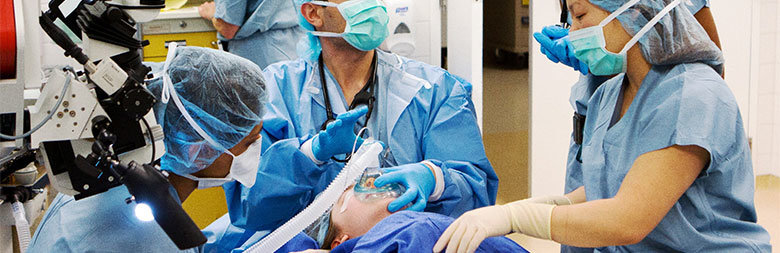
Anesthesiology is the art and science of reducing or eliminating pain. Each year, more than 26 million people in the United States undergo some form of medical treatment requiring anesthesiology. We typically think of anesthesiology in terms of what is done in the operating room to permit a surgical procedure to go forward without pain, but anesthesiology is also used to treat chronic and acute pain conditions.
|
Are there different types of anesthesiology?
Yes, there are at least three types of anesthesiology: **general**, **regional**, and **conscious sedation**. With general anesthesiology, medications are injected into the bloodstream or inhaled into the lungs. These medications produce unconsciousness and allow a surgical procedure to proceed in a pain-free manner. With regional anesthesiology, local anesthetic medications like lidocaine are injected into an area to render a part of the body insensitive to pain. Examples of regional anesthesiology include spinal anesthesiology, epidural anesthesiology, brachial plexus block anesthesiology, Bier Block and many others. Frequently sedative medications are administered during regional anesthesiology to produce relaxation and a pleasant and comfortable experience for the patient. With conscious sedation, medications are administered into the bloodstream that produce relaxation and comfort. This type of anesthesiology is usually considered when the surgical procedure is minimally painful. Patients usually have no memories of their procedure, but are able to talk and cooperate with the surgical staff during the operation.
|
|
|
Who administers anesthesiology?
In the United States, there are two major healthcare workers who are involved in administering anesthesiology: **physician anesthesiologists** and **nurse anesthetists (CRNA)**. There are many different practice arrangements at different institutions: anesthesiologists working alone, nurse anesthetists working alone, and anesthesiologists and nurse anesthetists working together. Both anesthesiologists and nurse anesthetists are highly educated to provide the highest standards of patient safety and care.
|
What is a CRNA?
The official title for a nurse anesthetist is CRNA, or Certified Registered Nurse Anesthesiologist. CRNAs are Advanced Practice Nurses who have specialized in anesthesia. In order to become a nurse anesthesiologist today, one must first obtain a degree in nursing and earn a baccalaureate degree either in nursing or one of the sciences; work for at least one year in a critical care unit; and have at least a 3.0 GPA. CRNA programs are very rigorous and result in a Doctorate degree for the graduate. After 36 months of training, the graduate must pass a national certifying exam and become licensed in the state.
Due to the high demand for nurse anesthetists and the limited number of student positions, application to anesthesiology school is very competitive. Typically nurse anesthesiology programs receive many more applications than they have positions available. Therefore, only the best and brightest applicants are accepted into nurse anesthesiology school. As you can see, nurse anesthetists are very well educated, trained, and qualified anesthesiology professionals. For more information on the role of a CRNA, read what the American Association of Nurse Anesthesiology has to say.
|
 |
|
Is anesthesiology safe?
anesthesiology is safer today than at any time in history. It has been estimated that a patient is more likely to have an automobile accident on the way to the hospital than to have a problem with their anesthesiology! anesthesiology is safer today for a number of reasons: better education and training for all anesthesiology providers, better medications, and better monitoring during your anesthesiology. The creation of safety standards by the national associations of anesthesiologists and nurse anesthetists has contributed to this safety record. So today, whether you have an anesthetic in a big city or small town, in Washington State or Washington, DC, by an anesthesiologist or nurse anesthetist, the safety standards are the same.
|
Is there anything I can do to help?
Yes there are a number of things you can do. Follow your **preoperative instructions carefully**. Most patients are asked to **refrain from eating and drinking after midnight** on the night before their surgery. **Get plenty of rest** before your surgery. **Bring your home medications** to the hospital or clinic with you. You will be advised on whether to take any of these medications. Plan to have a loved one or family member **remain at the hospital or clinic** throughout your surgery and recovery. If you are having outpatient surgery, you will need someone to drive you home. Allow for plenty of time to **recover** from surgery and anesthesiology.
|
|